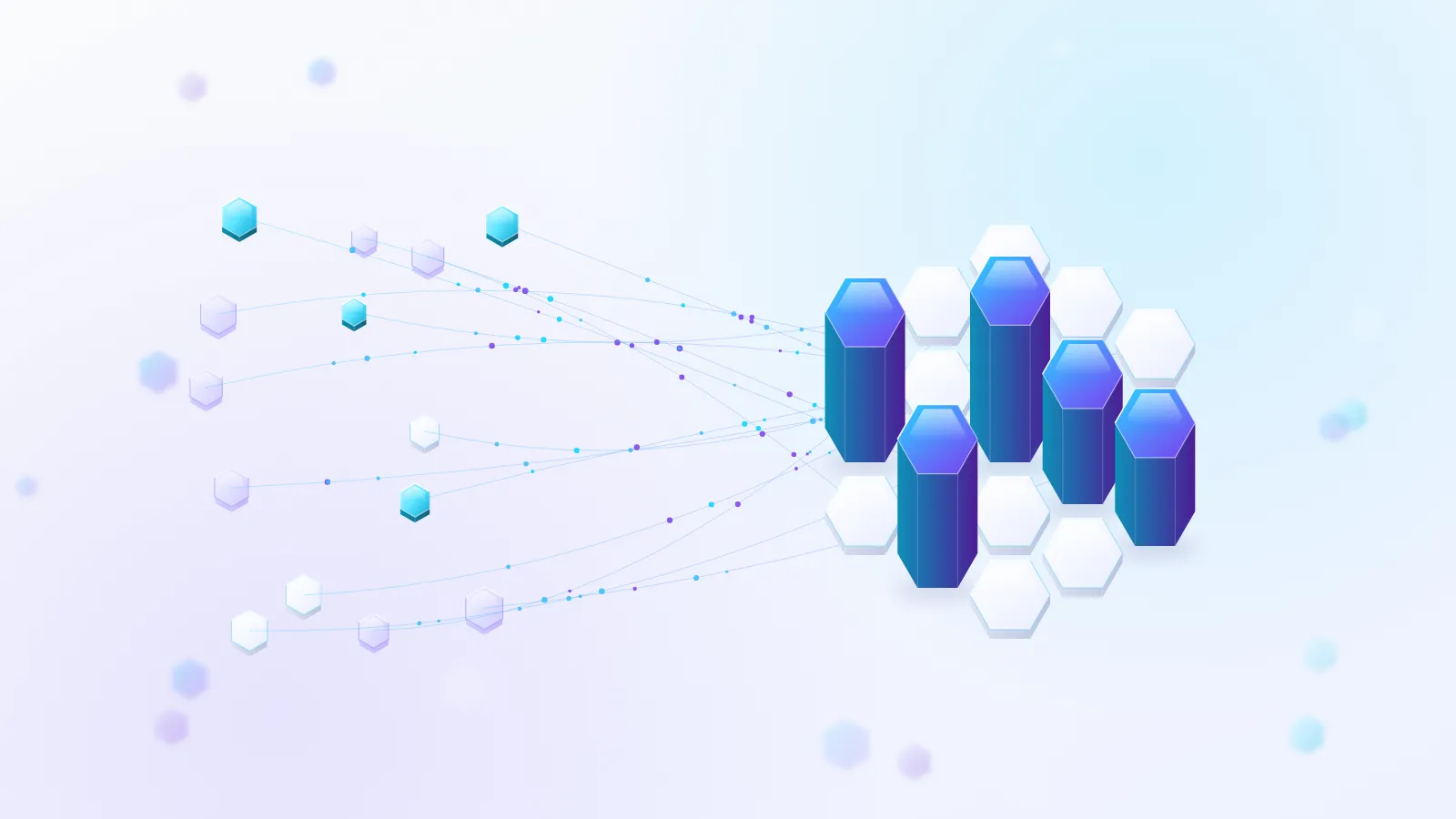

Every AI ambition rests on its data foundation. Our data and analytics practice modernizes fragmented warehouses, departmental spreadsheets and brittle pipelines into governed platforms that give leaders one version of the truth, and give machine learning teams data they can actually use.
The work is scoped and quoted per engagement. We start from the decisions your business needs to make, then design the strategy, pipelines, platform and reporting layer that support them. You get a platform your own team can run, not a dependency on ours.
Signs you need modernization
Most organizations do not decide to rebuild their data estate in a single meeting. They reach it after a series of small, expensive frustrations. If several of these sound familiar, the foundation is probably the constraint.
- Reports disagree across departments, and meetings begin with an argument about whose number is right.
- Month-end close takes days because figures are reconciled by hand between systems.
- Your data team spends most of its time fixing broken pipelines rather than building new capability.
- AI and machine learning pilots stall because the training data is incomplete, duplicated or undocumented.
- Nobody can say who owns a given dataset, where it came from or who is allowed to see it.
- Regulatory questions, such as those raised under the DPDP Act 2023 or GDPR, take weeks of manual investigation to answer.
What the practice delivers
The practice is organized around four connected workstreams. Each has its own service page with detail, and each can be bought alone or combined into one program.
Data strategy and governance
This is the operating model for your data: who owns each domain, what quality means, how data is classified and cataloged, and how privacy obligations are met. Our data strategy and governance service produces a target architecture and a governance model that is enforced in the pipeline, not parked in a policy document.
Data engineering
Batch and streaming pipelines, ELT, integration and DataOps automation. The data engineering service covers ingestion, transformation, schema contracts, automated quality checks and the CI/CD that keeps pipelines testable and owned.
Lakehouse, warehouse and BI
Migration from legacy warehouses to Snowflake, Databricks, BigQuery or Azure Synapse, with a governed semantic layer and self-service dashboards in Power BI, Tableau or Looker. This is the core of our big data and analytics service.
AI-powered analytics
Forecasting, segmentation, anomaly detection and natural-language query over your governed data. The AI-powered analytics service adds model lifecycle management so predictions are retrained and monitored rather than shipped once and forgotten.
Choosing where to start
You do not need all four workstreams at once. If reports disagree and nobody owns the data, begin with strategy and governance. If the definitions are fine but pipelines break weekly, begin with engineering. If the data is sound but nobody can reach it, begin with the lakehouse and semantic layer. We will tell you plainly which starting point fits, even when it is the smaller engagement.
How we deliver it
We sequence work so that each phase produces something usable and so that the riskiest assumptions are tested early. The table shows the typical shape. Durations depend on the number of source systems, the state of existing data and how many domains are in scope, so we confirm them in the proposal rather than promising them here.
| Phase | What happens | What you get |
|---|---|---|
| Assess | Inventory sources, interview data consumers, profile quality and review existing platforms and contracts. | Current-state map, prioritized domains and a candidate use-case list. |
| Design | Choose the target architecture, ownership model, security approach and platform fit. | Target architecture, governance model, platform recommendation and a costed roadmap. |
| Build the first domain | Implement pipelines, quality tests, semantic definitions and reports for one high-value domain end to end. | A working slice in production-like conditions, with named owners and documentation. |
| Scale out | Repeat the pattern across further domains and retire legacy feeds as consumers move over. | Additional domains live, decommission plan executed, runbooks updated. |
| Hand over and run | Train your team, transfer ownership of pipelines and optionally continue under a support arrangement. | Operational readiness, monitoring dashboards and a support model agreed in writing. |
Starting with one domain matters. It exposes the real integration, quality and access problems while the cost of learning is still small, and it gives business sponsors something concrete to react to.
Platforms we work with
We do not resell a single platform, and we recommend what fits your workloads, skills and existing cloud commitments. Common choices include the following.
- Warehouses and lakehouses: Snowflake, Databricks, Google BigQuery and Azure Synapse or Microsoft Fabric.
- Transformation and orchestration: dbt, Apache Airflow, Spark and native cloud services.
- Streaming: Apache Kafka and managed equivalents on AWS, Azure and Google Cloud.
- Business intelligence: Power BI, Tableau and Looker, usually sitting on a shared semantic layer.
- Catalog and lineage: open and commercial catalogs, selected for the sources you actually have.
Platform choice is tightly coupled to your cloud strategy. If that decision is still open, our cloud practice can run it in parallel so data and infrastructure choices are made together.
We also pay attention to cost. Consumption-priced platforms reward good engineering and punish careless queries, so we build in workload isolation, cost tagging and usage reporting from the first domain onward. That keeps the finance conversation factual after launch.
Governance and compliance
Governance fails when it is a committee that meets monthly. It works when classification, access policy and quality gates are enforced where the data moves. We design for that, and we map the controls to the regulations that apply to you.
- Privacy: data discovery and classification to support obligations under the DPDP Act 2023, GDPR and sector rules, including retention and deletion workflows.
- Access: role-based and attribute-based policies, column and row-level controls, and audit trails that show who queried what.
- Financial and healthcare data: alignment with RBI guidelines, PCI DSS or HIPAA where those frameworks apply to the data in scope.
- Lineage: traceability from a dashboard figure back to the source system, which shortens audits and incident reviews.
We map controls to these frameworks, but legal interpretation of your obligations stays with your counsel and compliance team.
Industry use cases
The platform pattern is similar across sectors, but the first use cases differ. These are typical examples of where the work begins, described as general context rather than as results for any named client.
Retail and consumer goods
Unifying point-of-sale, e-commerce, inventory and loyalty data so demand forecasting and promotion analysis use one set of numbers. See our retail and consumer goods page for sector context.
Banking and financial services
Building governed regulatory and risk reporting, customer 360 views and fraud features on data with clear lineage. See banking and financial services.
Common pitfalls
Data programs fail in predictable ways. Knowing them in advance is the cheapest risk control you have.
- Buying a platform before defining ownership. A new warehouse with the same unowned data simply reproduces the old problems faster. We settle domain ownership before migration begins.
- Migrating everything. Moving every legacy table is slow and preserves clutter. We migrate by value, and retire what nobody uses.
- Treating quality as a cleanup project. Quality that is not tested in each pipeline decays. We add automated checks as pipelines are built.
- Dashboards without definitions. Without a semantic layer, each team redefines revenue or active customer. We define metrics once and reuse them.
- Skipping the handover. A platform only your consultants understand is a liability. We plan documentation and training from the start.
Measuring success
Agree the measures before the work starts, and baseline them while you still have the old process to compare against. We do not claim outcomes in advance, but these are the indicators worth tracking.
- Time to produce the monthly close pack and number of manual reconciliation steps.
- Count of metrics with a single governed definition versus duplicated definitions.
- Share of critical datasets with a named owner, documented lineage and automated quality tests.
- Pipeline failure rate and mean time to detect and repair a broken pipeline.
- Time from a new analytics request to a usable dataset.
- Usage of governed dashboards compared with ad hoc spreadsheet extracts.
To estimate the financial case for a modernization, an ROI model is a useful starting point for discussion with your finance team.
Related services and next steps
Data work rarely stands alone. Models and generative applications depend on governed data, so many clients pair this practice with AI and generative AI services, and many modernizations run alongside a cloud move.
If you want to talk through your current estate, book a call with our team. If you already know the scope, you can request a proposal and we will respond with an approach, assumptions and a quoted engagement.