Legacy systems slow every initiative that depends on them. Application development is how you get out from under that drag: you build new digital products, modernize the old ones, and put the engineering practices in place so both can change safely. JPMCS delivers application development as one practice with five connected services, so the pieces fit together instead of arriving from five different vendors.
The goal is practical. Releases that go from quarterly toward weekly, a codebase your own engineers can read and extend, and a delivery pipeline that tells you the truth about quality before customers do. This page explains how the practice is organized, when to use each part, and what a sensible engagement looks like.
When you need this practice
Most application development engagements start with a symptom, not a strategy. If two or more of the signals below sound familiar, a structured engagement will likely pay for itself.
- A release needs a change window, a war room and a rollback plan written on a whiteboard
- One engineer holds the knowledge of a critical system and is a single point of failure
- New features take months because every change touches the same tangled module
- Regression testing is manual and gets cut when the schedule slips
- Staff copy data between systems by hand every day
- The business wants a customer portal or mobile app and the core systems cannot expose the data
None of these require a rewrite as the first move. They require an honest map of where the risk sits, then a sequence of small, reversible changes.
What we deliver
Custom web and mobile development
Customer portals, internal tools and mobile apps with responsive, accessible design. We scope in shippable increments, so something real is live every few weeks. See custom application development for the detail.
Legacy modernization
We refactor or re-platform monoliths into modular, cloud-ready services without a risky big-bang rewrite. Capabilities move one slice at a time, and the old system keeps running until the new one is proven. The approach is covered in legacy modernization.
DevOps and CI/CD
Pipelines, infrastructure as code, observability and release automation. The aim is routine releases and rollback in minutes, described under DevOps and CI/CD.
Quality engineering
Test automation, performance and load testing, and QA embedded in every sprint. Coverage is tied to real business risk rather than a percentage target. Read more on test automation.
Intelligent automation
RPA and process mining to remove repetitive manual work, with human review queues for exceptions. Details are on the intelligent automation page.
Digital experience
UX research, design systems and conversion-focused front ends. A shared design system means the third app you build costs far less than the first.
How the five services fit together
Each service works alone, but the value compounds when they run in the same program. A new application needs a pipeline and tests from the first commit. A modernization needs parity tests to prove the new service matches the old. Automation work needs the same pipeline to ship bots like any other software.
| If your priority is | Start with | It pulls in |
|---|---|---|
| A new product or portal | Custom application development | DevOps for the pipeline, test automation for regression coverage |
| Retiring an ageing core system | Legacy modernization | Test automation for parity checks, DevOps for staged cutovers |
| Faster, safer releases | DevOps and CI/CD | Test automation for pipeline gates |
| Cutting manual back-office work | Intelligent automation | Custom development for the review queues and integrations |
| Release confidence | Test automation | DevOps so tests run on every change |
How we modernize safely
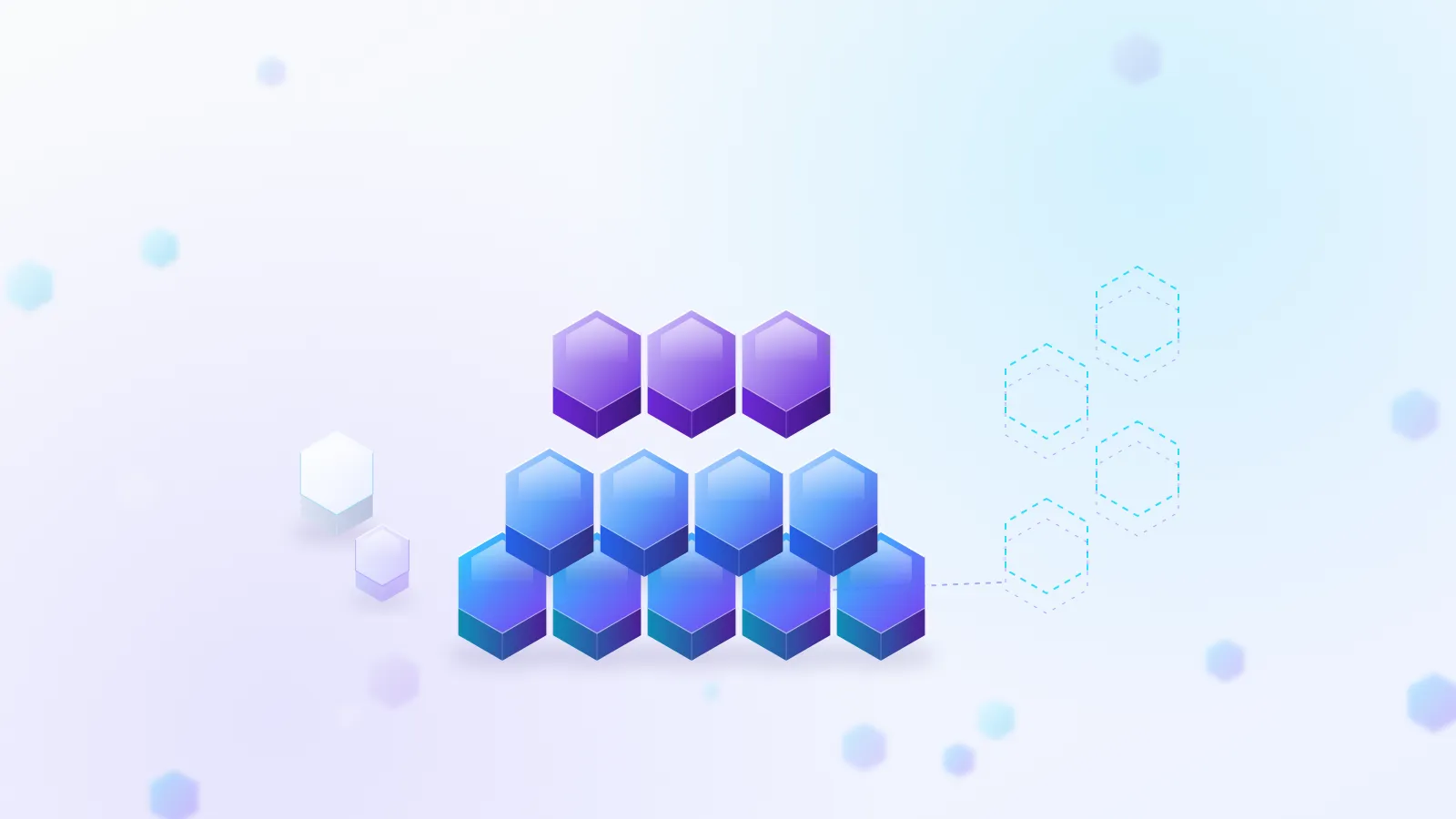
We do not recommend a big-bang rewrite. Rewrites freeze the business, hide risk until the end and often rebuild the same problems in a newer language. Instead we use the strangler pattern: put a routing layer in front of the old system, move one capability at a time to the new service, and retire the old code only when traffic proves the replacement.
The safeguards are consistent across every engagement:
- Automated regression suites written against the existing behavior before anything moves
- Feature flags so a new path can be switched off in seconds
- Parallel runs where old and new process the same input and the outputs are compared
- A named decommission step, so the legacy cost is actually removed
How we deliver
Engagements follow four phases. Scope and price are set after the first phase, not before it, because an estimate written blind is the most common source of overruns.
| Phase | What happens | What you get |
|---|---|---|
| Discover | Review code, systems, team practices and delivery metrics | Risk map and a sequenced backlog |
| Foundation | Repositories, pipeline, environments and test baseline | A working path to production |
| Build and migrate | Increments delivered with tests, reviewed with your team | Working software every few weeks |
| Handover | Documentation, pairing and runbooks | A team that can run it without us |
We adapt to your repositories, ticketing and team ceremonies, or set them up if you need that. You own the code in full from the first commit.
Technology we work with
We recommend what fits your team and workload, not a preferred stack. Typical choices include React and Next.js or Angular on the front end, Java, .NET, Node.js, Python and PHP on the back end, and Flutter or React Native for cross-platform mobile where native builds are not justified. Containers and Kubernetes appear when scale demands them, and a plain managed service is often the better answer when it does not.
For delivery we work with GitHub Actions, GitLab CI, Azure DevOps and Jenkins, and with Terraform for infrastructure. Hosting decisions on AWS, Azure or Google Cloud are made with your platform team, and we document the reasoning so a later change of provider stays affordable.
Industry examples
The same engineering practices apply everywhere, but the use cases differ by sector.
- Retail and consumer goods: omnichannel commerce front ends, order and inventory APIs, and promotion engines that change weekly
- Banking and financial services: digital onboarding flows, payment integrations and the gradual replacement of batch-driven core components, within RBI guidelines
Governance, security and compliance
Application work touches personal data, payment flows and production access, so governance has to be part of the build, not a review at the end. We bring security checks into the pipeline: dependency scanning, static analysis and container image checks that fail a build before a vulnerable component reaches an environment.
Where the application handles personal data, we design for the DPDP Act 2023 and, for European users, GDPR. Data minimization, consent records, retention rules and deletion paths are requirements in the backlog, not afterthoughts. Healthcare workloads may add HIPAA, and card payments add PCI DSS scope decisions that are best made early, because tokenization can keep most of your estate out of scope.
Access follows least privilege. Developers do not hold standing production credentials, and every deployment leaves an audit trail linking a change to a person, a ticket and a test result. Our cybersecurity practice can review the architecture independently when your risk team asks for it.
Choosing where to start
Teams often ask which of the five services comes first. The honest answer depends on what is hurting. If releases are painful, fix the pipeline and the tests before building anything new, because every later project inherits that foundation. If a system is blocking the business, start with the assessment that maps its risks and decides between wrapping and replacing.
A short advisory sprint can settle the question in a few weeks and leave you with a sequenced roadmap, whether or not you continue with us.
Common pitfalls
Starting with a rewrite
A full rewrite looks clean on a slide and fails in practice because the old system encodes years of undocumented rules. We extract and test those rules first.
Treating testing as a final phase
If QA starts after development ends, defects arrive late and expensive. Tests are written alongside features and run in the pipeline on every change.
Ignoring the people who run the system
The staff who operate a legacy system know its quirks. We involve them in design reviews and acceptance testing, because they find the edge cases no specification mentions.
Automating a broken process
Automation speeds up whatever it is pointed at. We map and simplify the process before a bot touches it.
Measuring success
Agree the measures at the start and review them every sprint. Useful indicators include deployment frequency, lead time for changes, change failure rate and time to restore service, which are the four DORA metrics. Add escaped defect counts, the share of regression tests automated, and the percentage of legacy traffic served by new components.
Next steps
If you already know your priority, use the service pages above. If you are weighing options, book a call and bring your release process and your most painful system. If you want a scoped, quoted plan, request a proposal.